
Boslla Bullet B4 3-Color LED Headlight Kit Review
A specialty multi-color LED that trades simple one-mode installation for switchable white, blended white/yellow, yellow, and warning-flash output. Its current chart results remain useful, while the original mode-specific findings explain why clocking matters so much.
- Reflector performance
- 4.5current score · 5.0 reference baseline
- Projector performance
- 4.0current score · 5.0 reference baseline
- Measured output
- 8,420 lmper pair · 4,210 lm per bulb
- White-mode color
- 5,750 Kcurrent chart measurement
Our verdict
The Bullet B4 remains a useful specialty choice for drivers who genuinely want white and yellow modes in one kit. Its current results are respectable rather than class-leading, and the one-degree collar adjustment is essential because the different emitter rows cannot all reproduce the same beam position in a given housing.
What we liked
- Four switchable modes offer white, mixed white/yellow, yellow, and warning-flash output from one bulb.
- Current reflector testing records useful output, while the correctly clocked original white-mode beam earned a separate 5 / 5 pattern rating.
- Strong mode-specific lumen output, one-degree clocking, moderate power draw, and a compact rear dimension support the specialty design.
What to consider
- Clocking for one emitter row can leave another color mode with an incorrect, higher, or potentially glaring beam.
- Current projector output and the one-year warranty are less compelling than the product’s multi-color flexibility.
- Exact-vehicle fitment, decoder needs, in-cabin fan noise, RFI, and long-term lifespan remain unconfirmed.
Build quality
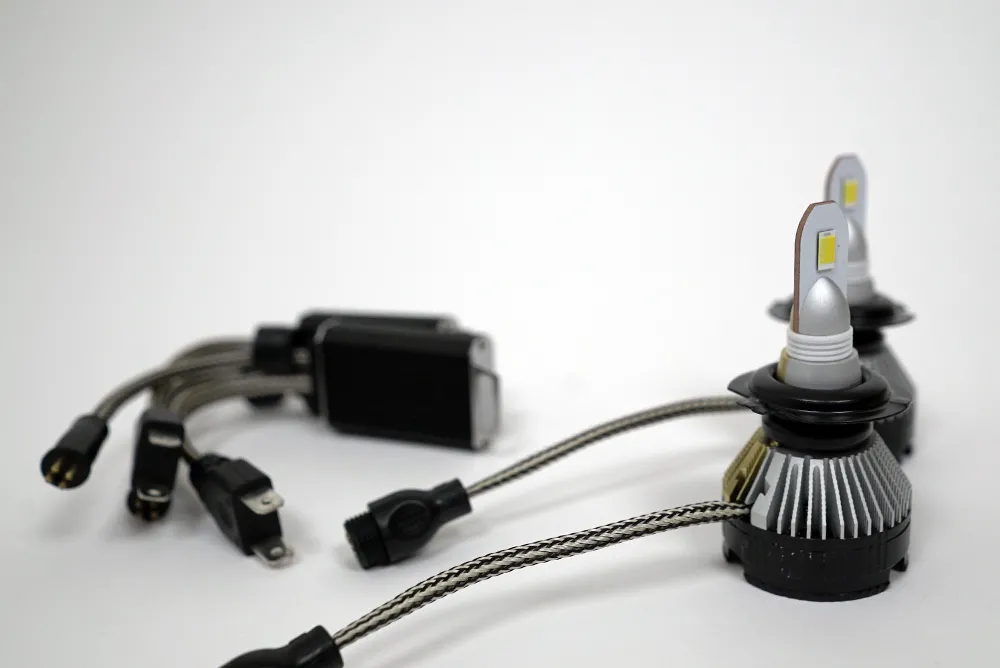
BulbFacts initially expected the Bullet’s popularity to be driven mainly by marketing, but the supplied sample changed that impression once it was handled and tested. Boslla provided the sample only; the company did not pay for or control the review.
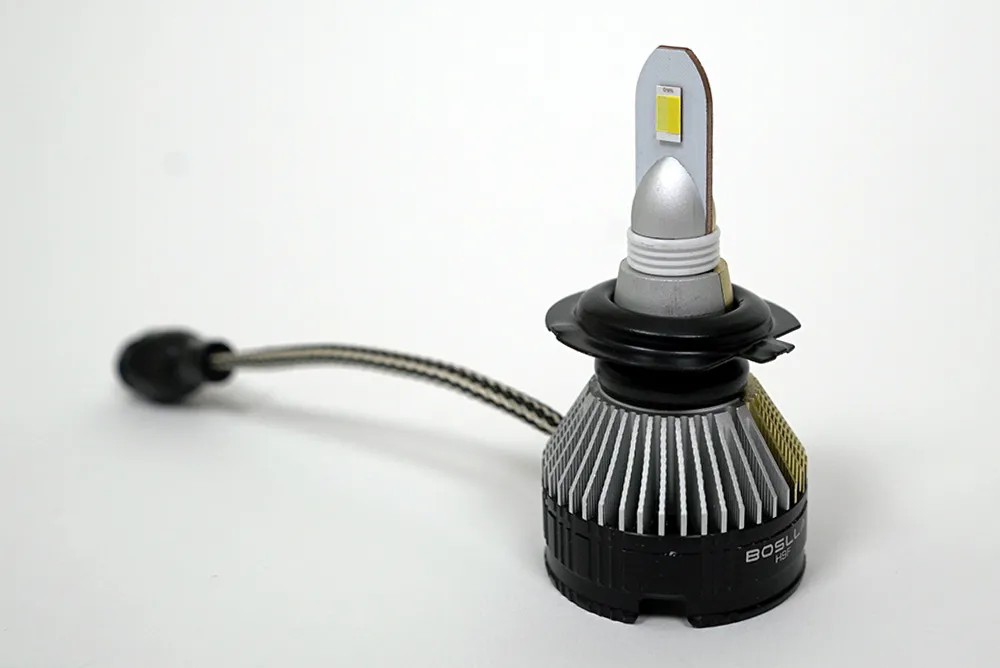
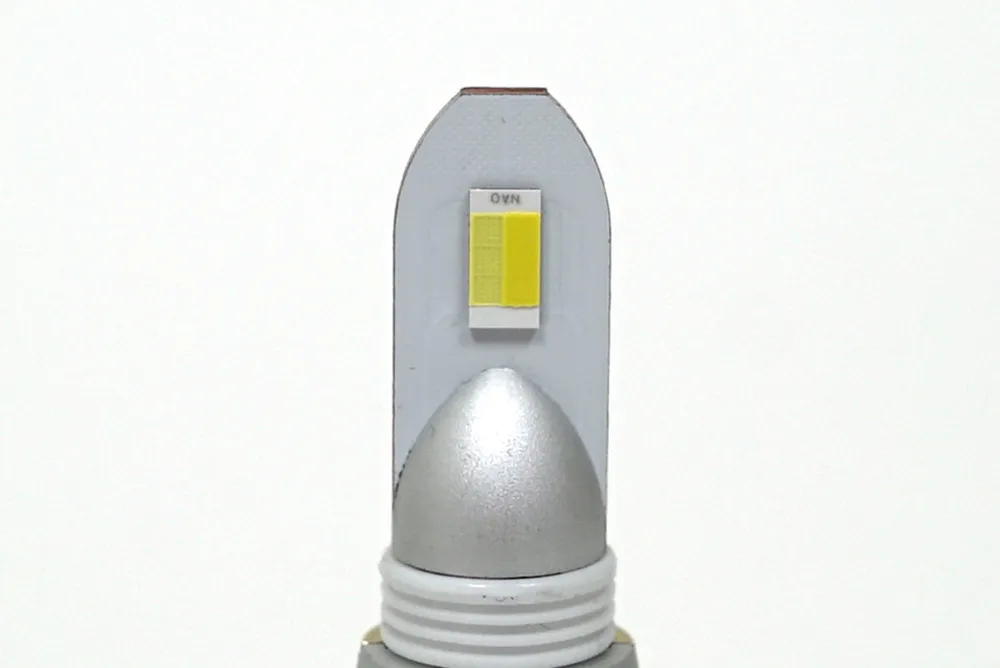
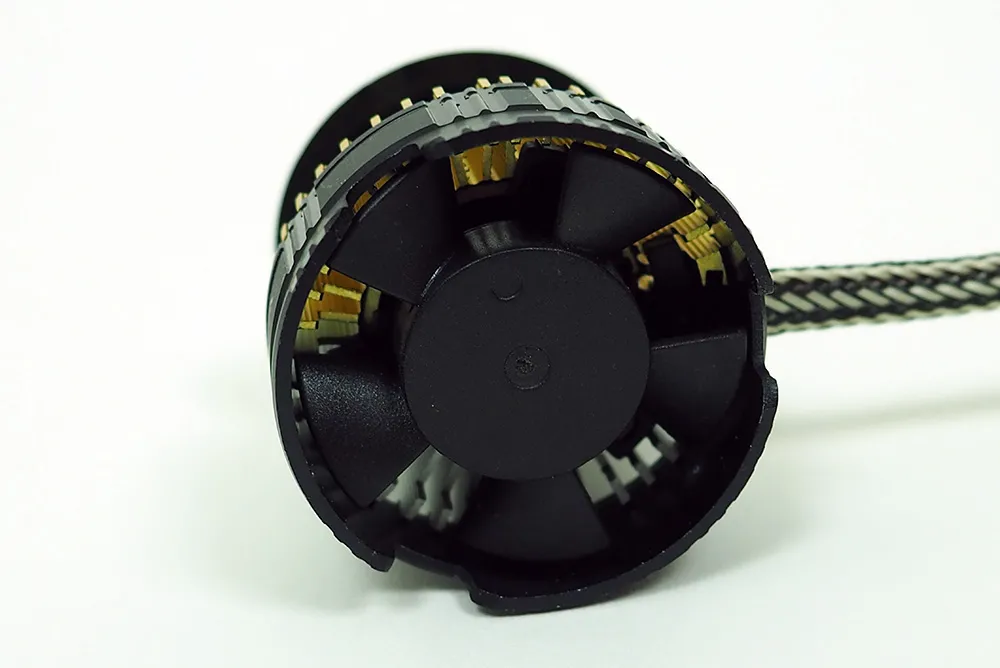
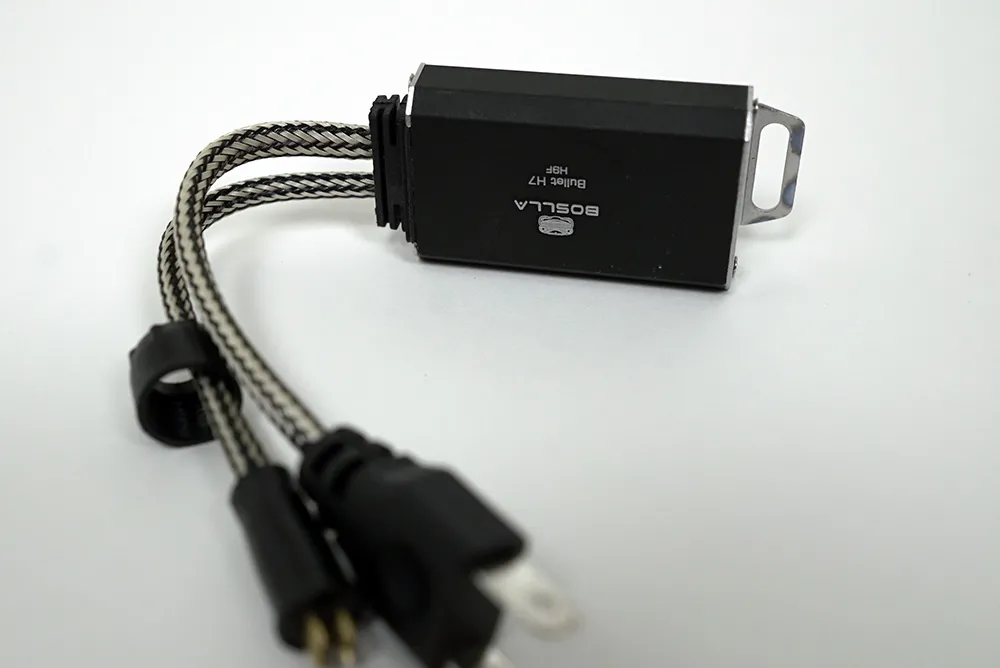
The design combines two emitter colors on a flat board, a finned fan-cooled body, a removable external driver, and a collar that can be adjusted one degree at a time. Boslla identified the LED source as Philips, although the exact diode model was not independently verified.
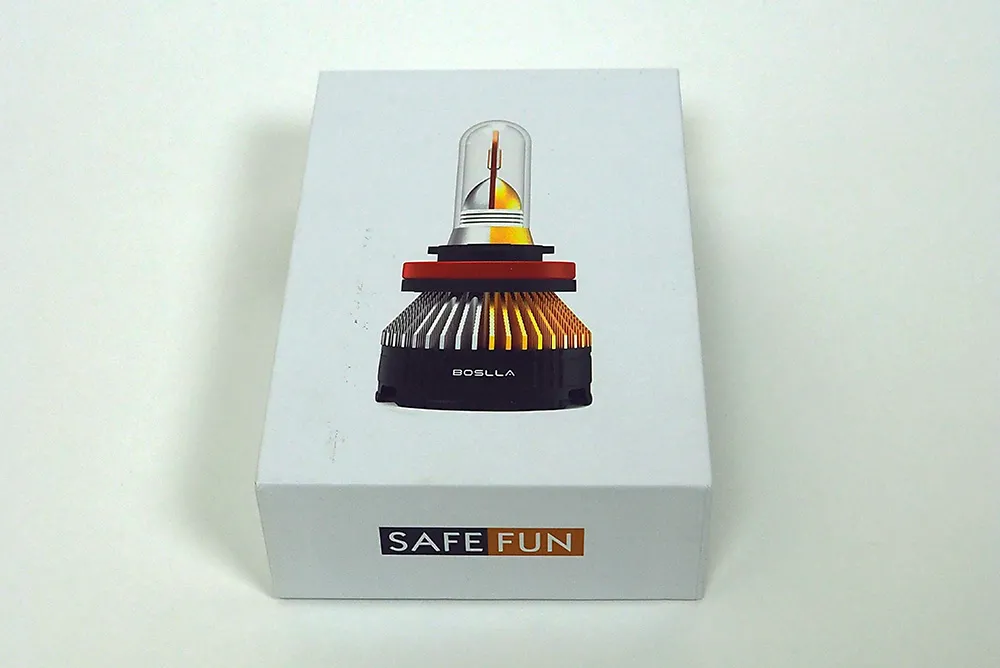
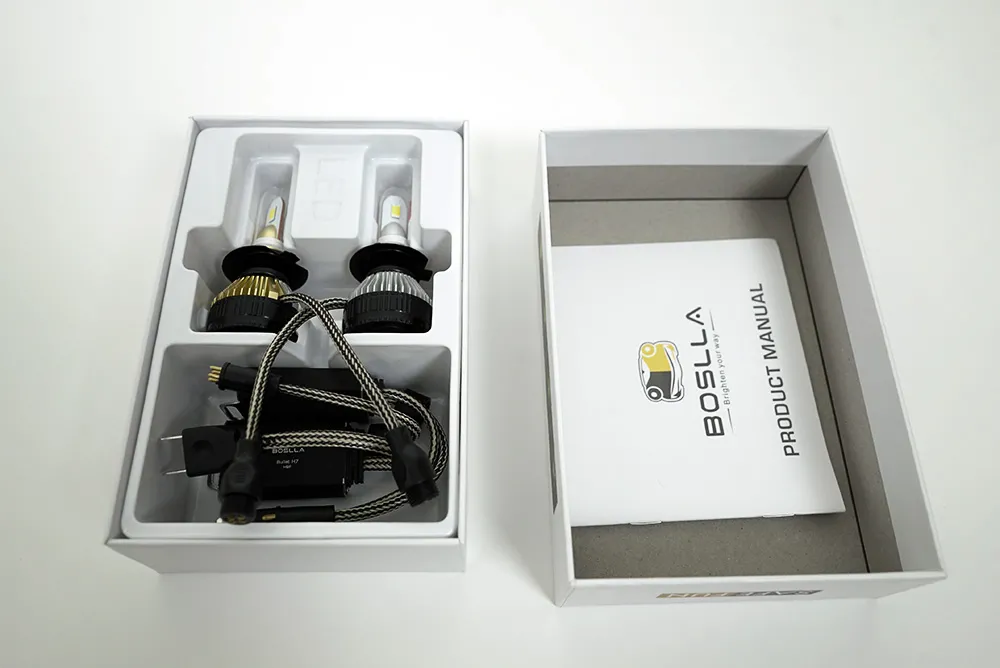
The hardware felt compact and reasonably substantial for an early multi-mode product. The seven genuine BulbFacts photographs show the tested pair, emitter rows, cooling fan, external driver, retail box, and included components.
Reflector headlight performance
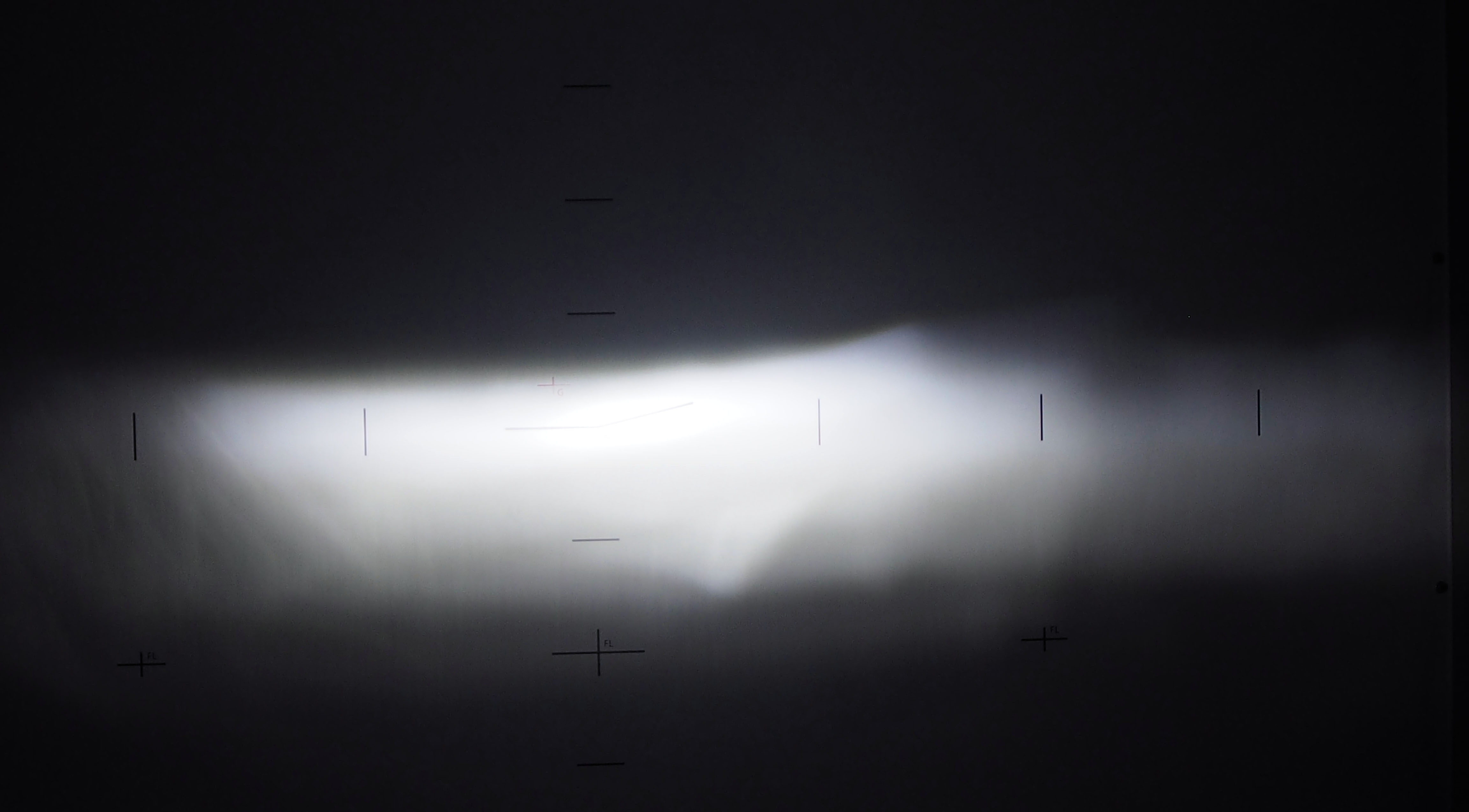
In the current white-mode test, the Bullet B4 produced useful reflector output but also measurable glare and a 4 / 5 pattern rating. Its correctly clocked original version-1.0 result was stronger, which is why the two generations are kept separate.
About these tests: These are BulbFacts reference-housing results, not exact-vehicle tests. Seating, optics, lens condition, aim, and the selected color mode can change output, glare, and beam shape.
Gray dots show every scored kit. Named markers are current BulbFacts recommendations. The 5.0 reference is a baseline, not a maximum.
Reflector performance score 4.5 compared with 54 scored LED kits and the 5.0 reference baseline.
- Low-beam hotspot
- 958 luxper bulb
Reflector low-beam output of 958 lux compared with 54 scored products.
- High-beam output
- 1,842 luxper bulb
Reflector high-beam output of 1,842 lux compared with 54 scored products.
- Glare measurement
- 159 luxreference housing
Reflector glare measurement of 159 lux compared with 22 products with recorded glare data. Lower is better.
- Beam pattern
- 4 / 5separate pattern rating
Reflector beam-pattern rating of 4 out of 5 compared with 22 products with recorded ratings. Higher is better.
A matching current high-beam test image is not available in this review.
The current chart records 958 lux per bulb on low beam, about 157% over the current 373-lux halogen reference. High beam measured 1,842 lux per bulb, about 110% over the 876-lux reference.
Current reflector glare measured 159 lux, and the separate current beam-pattern rating is 4 / 5. Those values describe the white-mode chart test and must not be mixed with the older score or pattern rating.
In the original version-1.0 test, white mode recorded 5,400 lux low and 7,360 lux high, with a 5.1 performance score and a separate 5 / 5 pattern rating when clocked correctly. White/yellow mode recorded 3,740 lux low and 4,580 lux high. The archive also lists 4,210 and 5,730 lux under a second pair of “white mode” labels; that mode assignment remains unresolved rather than being silently corrected.
Projector headlight performance
Current projector output is usable but no longer a standout result. The original version-1.0 test recorded substantially stronger mode-specific numbers and a small lower-beam dark spot typical of many LED conversions.
Gray dots show every scored kit. Named markers are current BulbFacts recommendations. The 5.0 reference is a baseline, not a maximum.
Projector performance score 4.0 compared with 54 scored LED kits and the 5.0 reference baseline.
- Low-beam hotspot
- 498 luxper bulb
Projector low-beam output of 498 lux compared with 54 scored products.
- High-beam output
- 498 luxper bulb
Projector high-beam output of 498 lux compared with 54 scored products.
- Beam pattern
- 2 / 5separate pattern rating
Projector beam-pattern rating of 2 out of 5 compared with 47 products with recorded ratings. Higher is better.
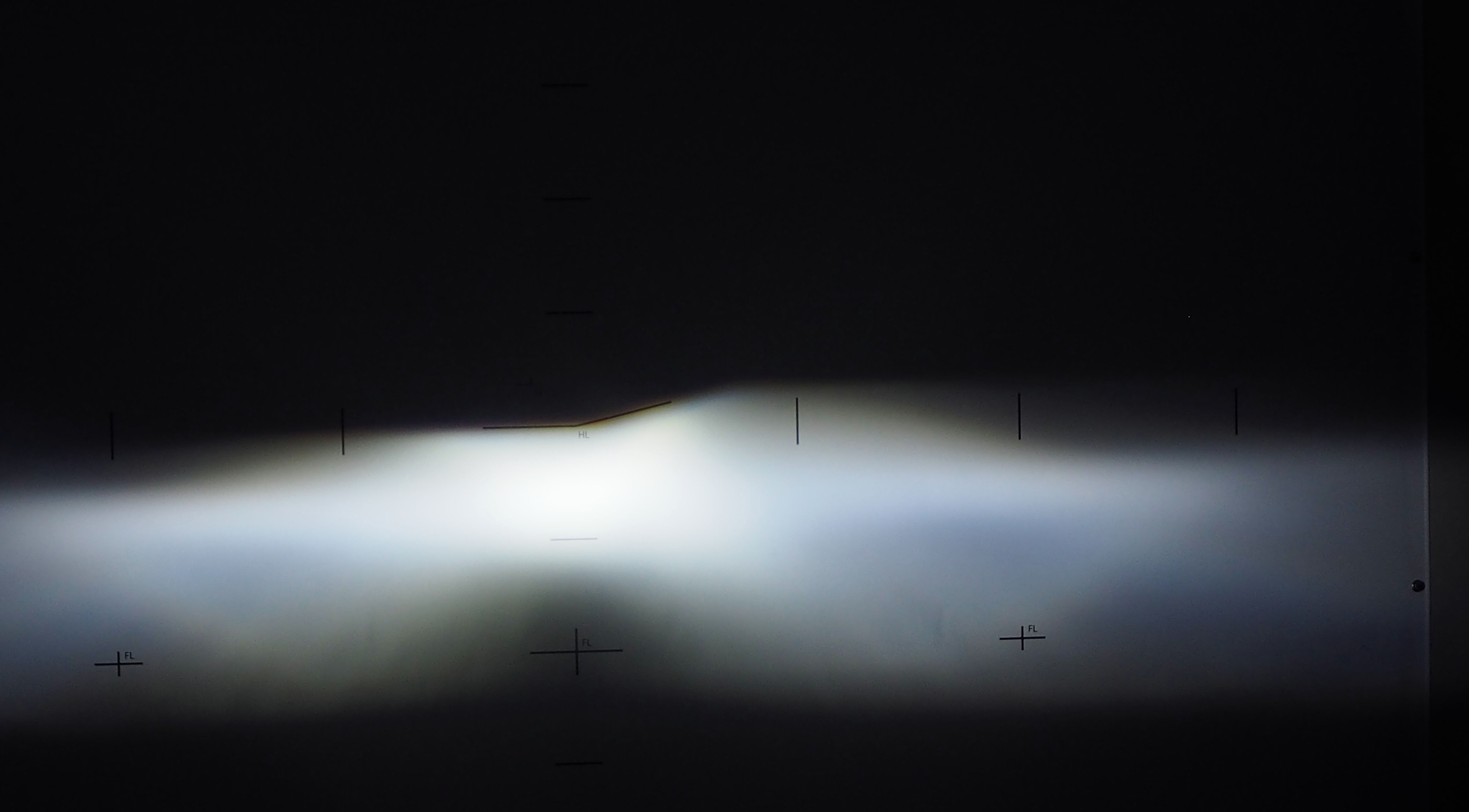
A matching current high-beam test image is not available in this review.
The current chart records 498 lux per bulb for both projector low and high beam, with a 4.0 performance score and a separate 2 / 5 beam-pattern rating. Numerical projector glare was not recorded.
Against the current reference values, low beam is about 117% above the 230-lux halogen result and high beam is about 13% above the 442-lux result.
The original version-1.0 white-mode test recorded 2,700 lux low and 5,880 lux high, earning a 4.8 performance score. The archived article reports 208% more low-beam output and 97% more high-beam output. White/yellow mode recorded 2,010 / 3,640 lux, while yellow mode recorded 2,370 / 3,490 lux.
How the four modes affect the beam
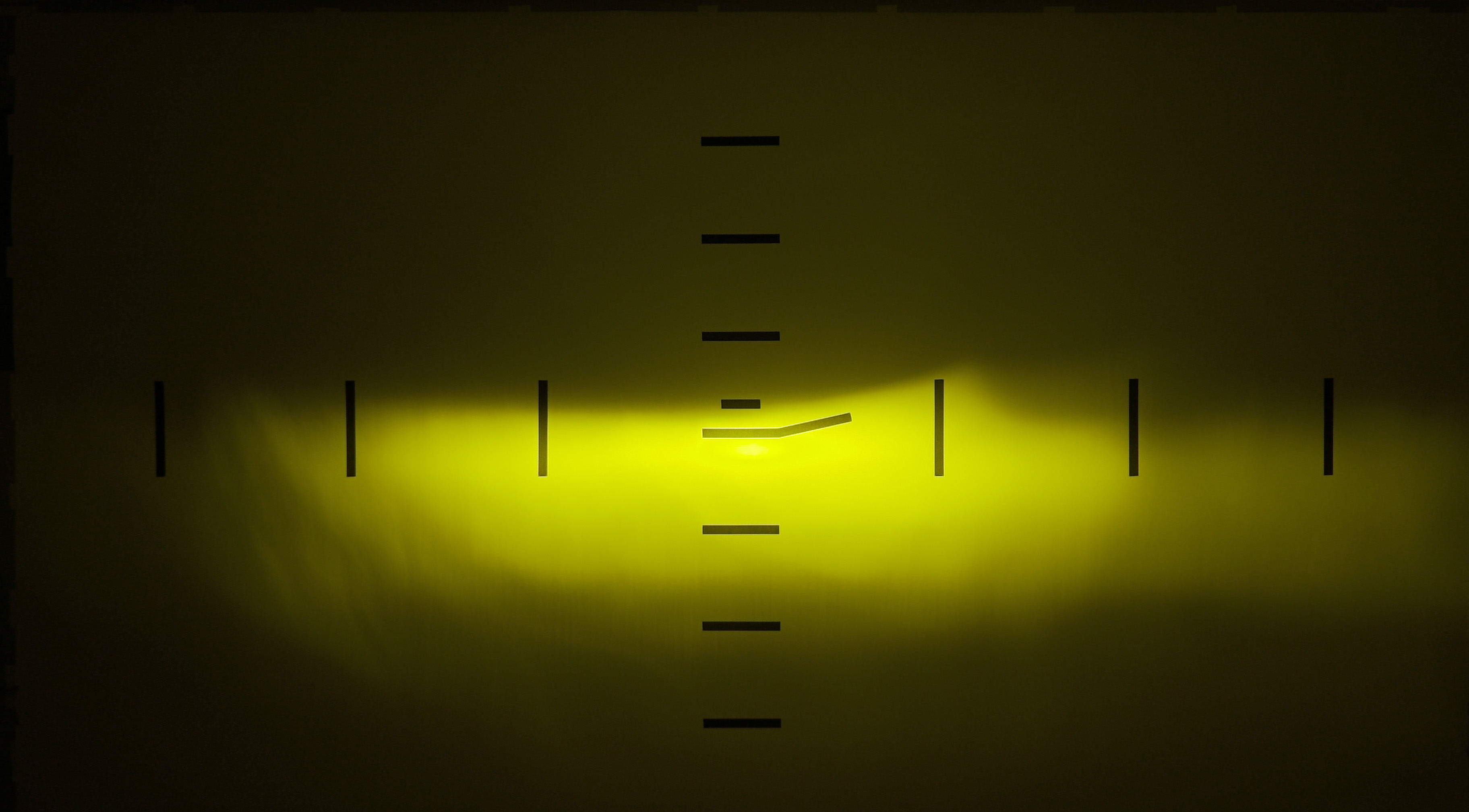
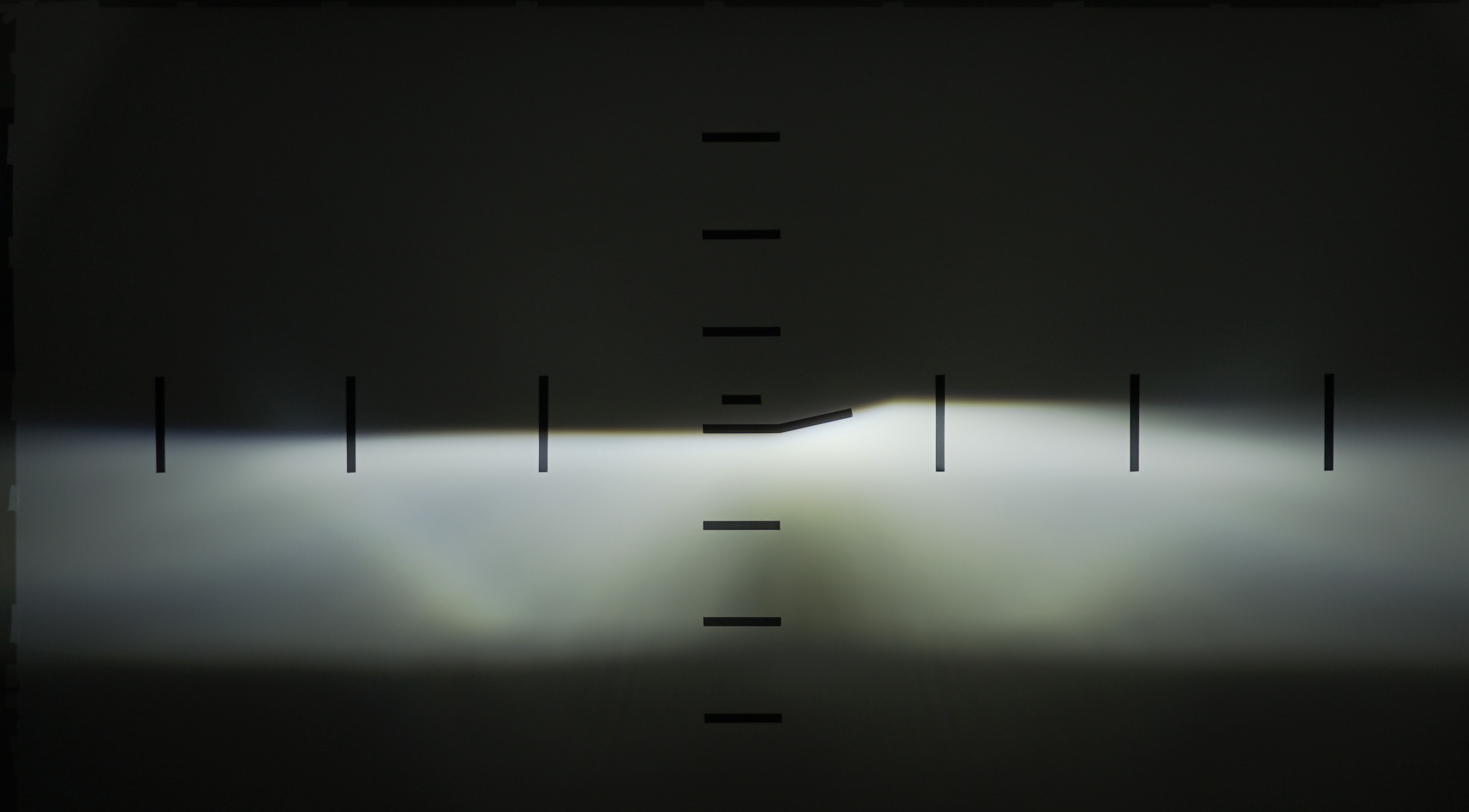
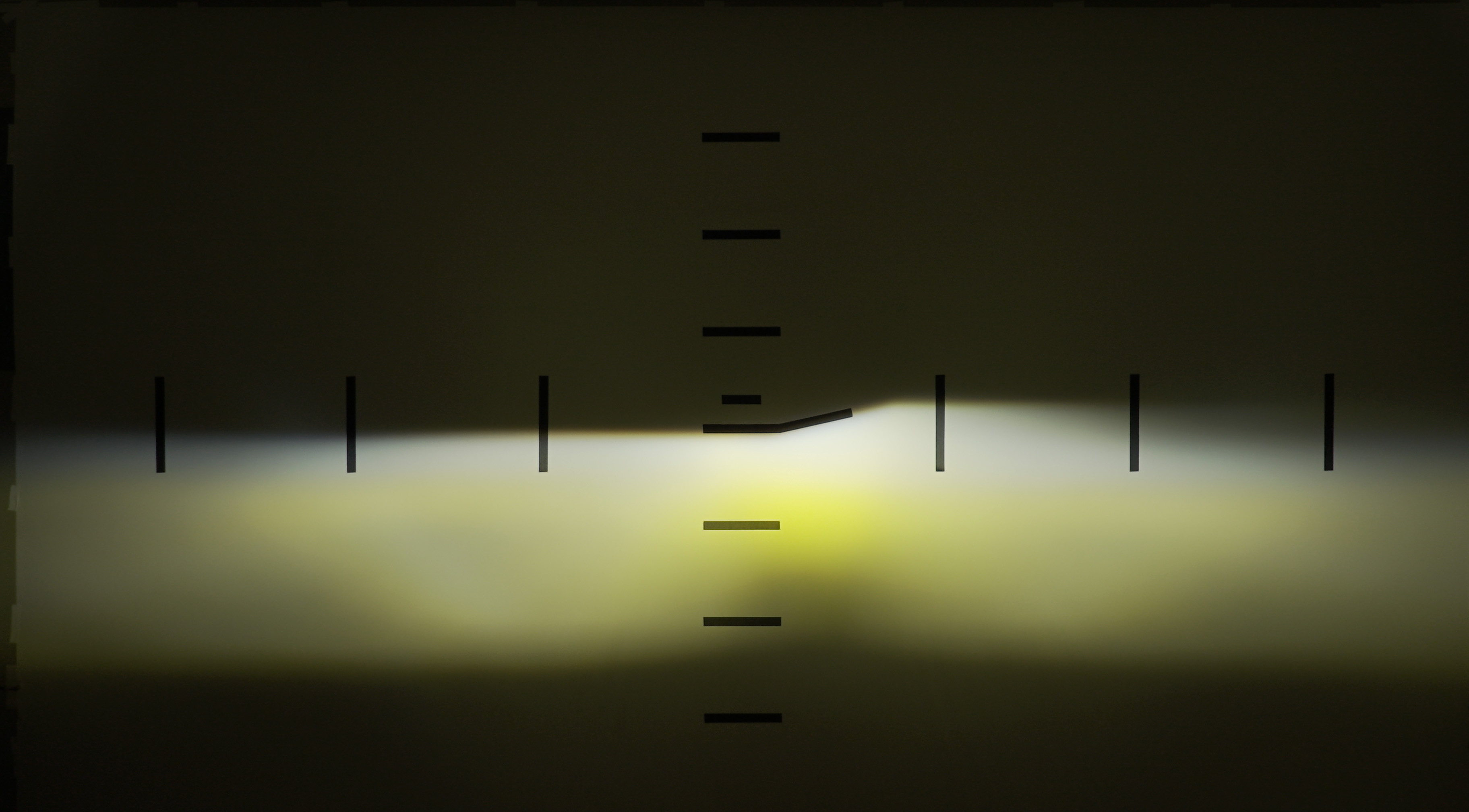
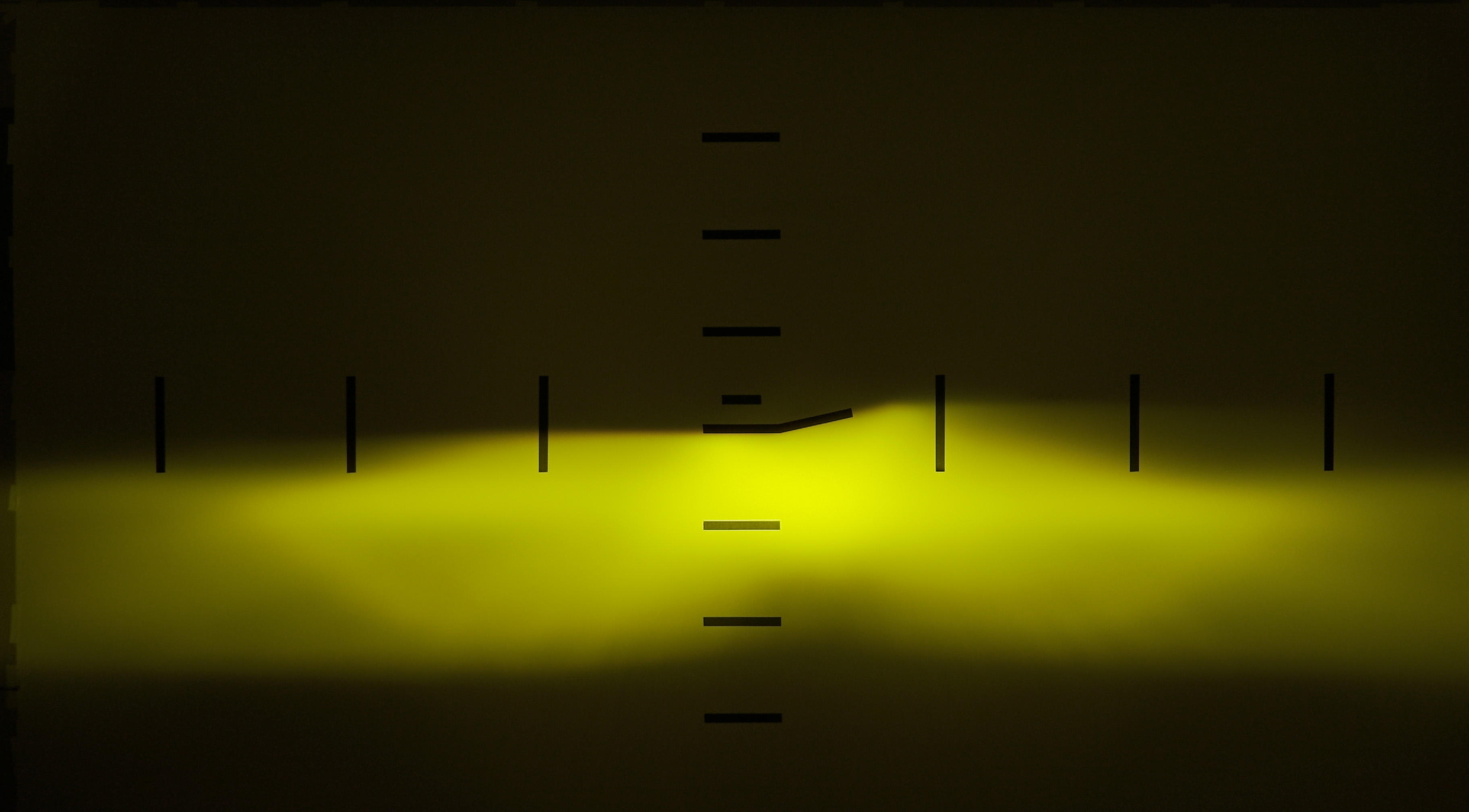
The B4 starts in white mode, then cycles through mixed white/yellow, yellow, and a yellow warning-flash pattern when power is switched off and back on.
Different modes illuminate different emitter rows, so the housing does not see every color from exactly the same position. Clock the bulb around the mode you will use most, then inspect the cutoff and aim again whenever another mode is used. A correct white beam does not guarantee a correct yellow or mixed beam.
White is the default when the lights come on. That matters in fog-light use: clocking for yellow can improve that mode, but the light will still start in white and require cycling each time. The warning-flash mode can be distracting if selected accidentally and should only be used where it is legal and safe.

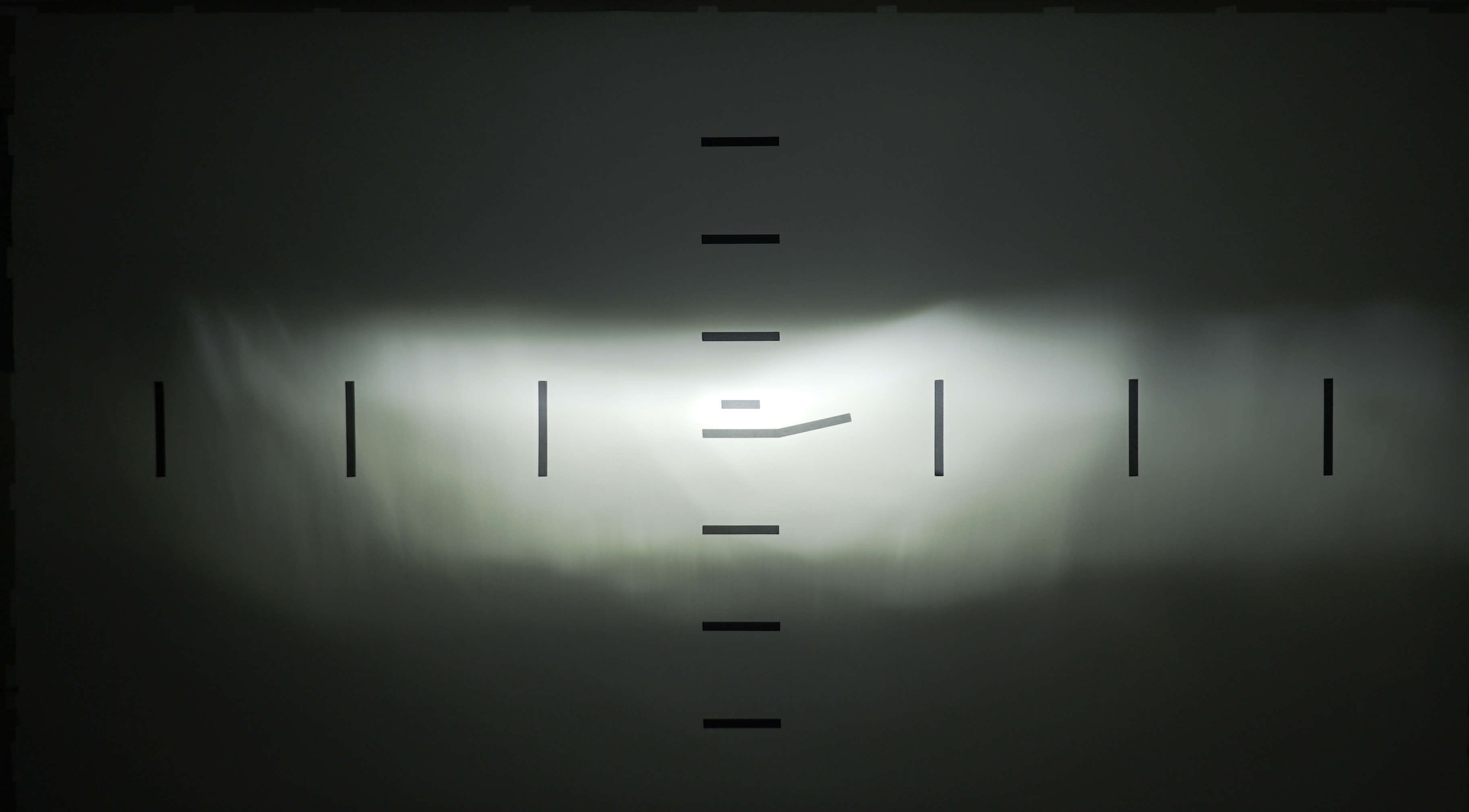
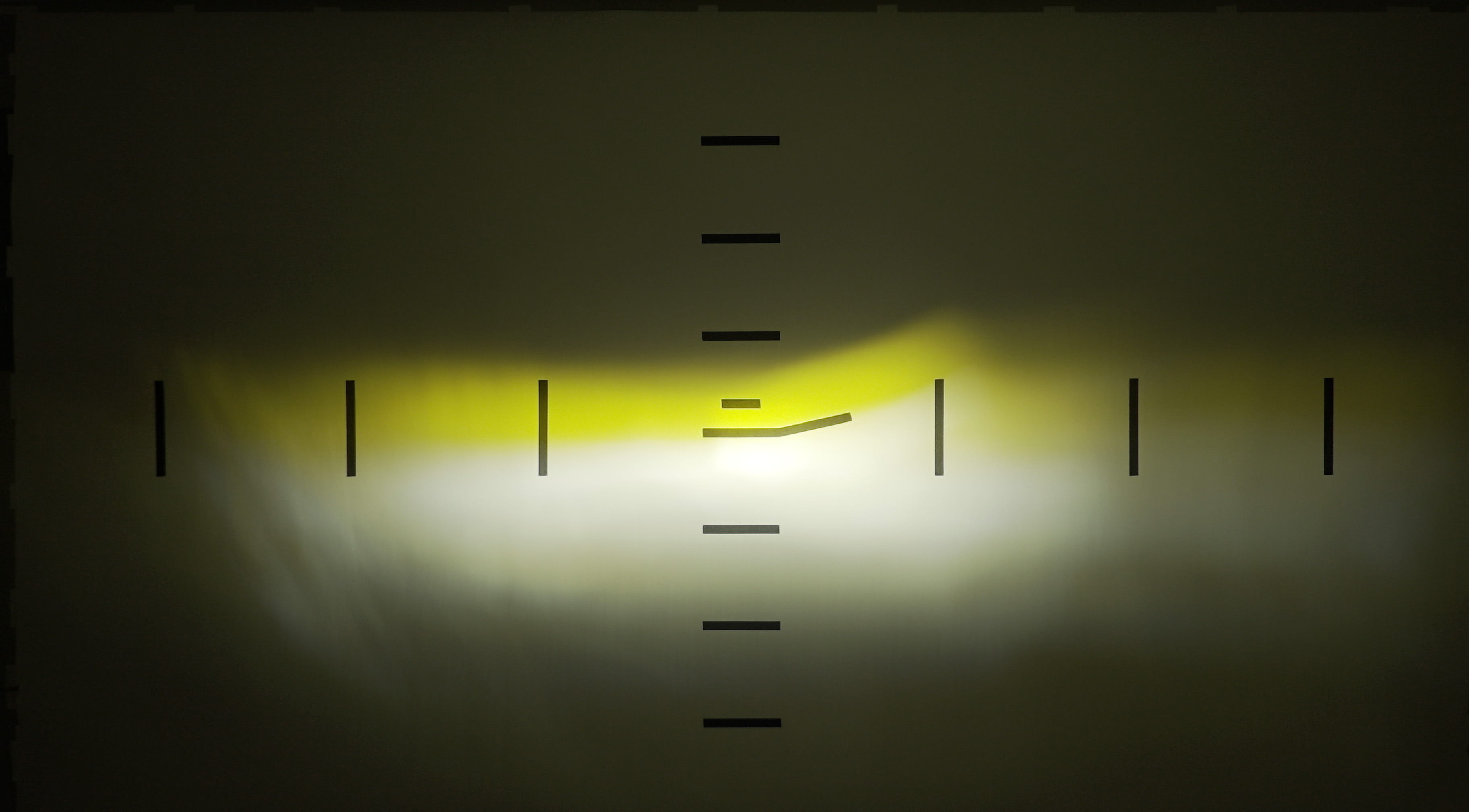
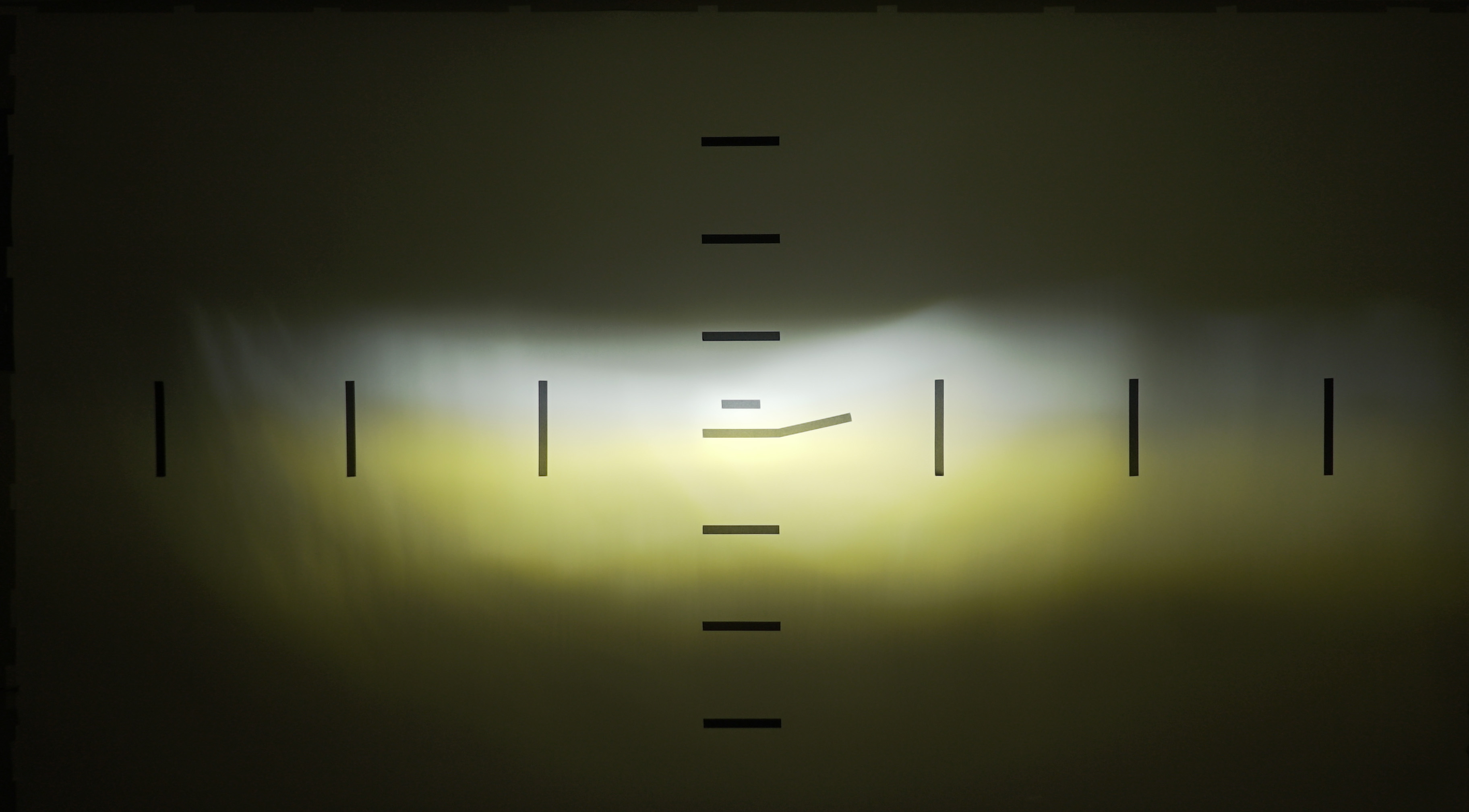
Output, color, and mode measurements
White, mixed, and yellow output are distinct measurements; the blended mode is not a precise single-Kelvin source.
Boslla Bullet B4 white mode Kelvin
Boslla Bullet B4 white mode lumens
White mode measured 5,750K in the article narrative and current chart. The archived facts table instead lists 5,250K, so that conflict remains documented rather than being averaged away.
The blended white/yellow mode averaged about 5,500K on one meter and about 4,900K on another. Because both emitter colors operate together, it is better understood as a blend than as a precise advertised color temperature. Yellow mode measured about 2,950K.
White mode measured 4,210 lumens per bulb, or 8,420 lumens per pair. Mixed mode reached 9,532 lumens per pair, while yellow mode measured 3,925 lumens per bulb, or 7,850 per pair.
Installation and cooling
One-degree clocking, the external driver, active fan, mode-dependent draw, and vehicle-specific electronics are the main installation considerations.
White-mode draw
Recorded temp
Fan noise
Physical size and fit
The bulb measured 36 mm at its widest point, 34 mm from the base to the rear, and 37 mm through the diode-handle dimension. The removable external driver measured 55 × 30 × 13 mm.
The collar adjusts in one-degree increments. Start with the emitters facing left and right, then inspect the actual cutoff and aim in the primary mode. Confirm bulb size, seating, rear clearance, dust-cover room, driver placement, and electronics for the selected vehicle.
Power draw and cooling
Draw varied by mode: 28.1 watts per bulb in white, 26.6 watts in mixed white/yellow, and about 27.9 watts in yellow. A white-mode pair therefore draws a derived 56.2 watts.
The measured heat-sink temperature was 109°F / 43°C, compared with about 160°F for the archived halogen reference. The original enclosed-headlight run also recorded about 99.5°F ambient temperature behind the closed dust cap. These short measurements are not lifespan results.
Noise, electronics, and DRL behavior
Fan noise measured 63 dB on the bench. The original review considered it relatively quiet, but no in-cabin sound level was recorded.
The current chart labels the product CANBUS-friendly, while the original version-1.0 facts marked compatibility “No” and warned that lower draw could trigger a bulb-out message. Treat that as a test-generation discrepancy: some vehicles may still need a decoder.
The original test recorded full PWM dimming and standard-line operation down to 6.3 volts. That supports DRL use in the reference setup but does not guarantee correct dimming in every vehicle. RFI was not recorded.
Warranty and long-term testing
Coverage
Boslla lists a one-year warranty. That is coverage rather than evidence of measured service life, and the review considered it short for the product’s price.
Long-term lifespan remains N/A. Neither the thermal readings nor the warranty substitute for completed durability testing.
Should you buy it?
Choose the Bullet B4 when switchable white and yellow output is the deciding feature and you are prepared to clock and re-check the beam around the mode you use most. Its current reflector results, strong mode-specific lumen output, and fine collar adjustment support that use.
Consider a conventional single-color LED instead if you want the simplest beam setup, stronger current projector performance, longer warranty coverage, or fewer questions about decoder behavior. No reference-housing result guarantees the same outcome in a particular vehicle.
If those tradeoffs work for your vehicle, check the current price or compare the test results before deciding.
Full measurements and specifications
Open this reference for every recorded current and historical measurement, source conflict, unavailable field, and test-version detail. The main findings remain visible above.
Show all recorded measurements and specificationsFive groups · current chart + version 1.0 archive
Measured output
- Reflector performance score
- 4.5 current chart; 5.1 original version 1.0; 5.0 is the reference baseline, not a maximum
- Reflector low-beam hotspot
- 958 lux per bulb in the current white-mode test; 5,400 original white-mode lux
- Reflector low-beam improvement
- 157% over the current 373-lux halogen reference; original article reports about 3.3 times halogen
- Reflector high-beam output
- 1,842 lux per bulb current; 7,360 original white-mode lux
- Reflector high-beam improvement
- 110% over the current 876-lux halogen reference; original article reports 107%
- Projector performance score
- 4.0 current chart; 4.8 original version 1.0; 5.0 is the reference baseline, not a maximum
- Projector low-beam hotspot
- 498 lux per bulb current; 2,700 original white-mode lux
- Projector low-beam improvement
- 117% over the current 230-lux halogen reference; original article reports 208%
- Projector high-beam output
- 498 lux per bulb current; 5,880 original white-mode lux
- Projector high-beam improvement
- 13% over the current 442-lux halogen reference; original article reports 97%
- Measured lumens
- White: 8,420 per pair / 4,210 per bulb; mixed: 9,532 per pair / 4,766 per bulb; yellow: 7,850 per pair / 3,925 per bulb
- Lumen improvement
- No halogen lumen percentage was recorded
Beam quality
- Reflector beam-pattern rating
- 4 / 5 current; 5 / 5 original when correctly clocked; separate from performance score
- Projector beam-pattern rating
- 2 / 5 in the current test record
- Reflector glare measurement
- 159 lux current; numeric value N/A in the original article, which described minimal glare when correctly clocked
- Projector glare measurement
- N/A; no numeric value recorded
Power, color, and thermal behavior
- Measured color temperature
- White 5,750K in the narrative/current chart, but 5,250K in the archived facts; mixed about 5,500K on one meter and 4,900K on another; yellow 2,950K
- Measured electrical draw
- 28.1 watts per bulb white; 26.6 watts mixed; about 27.9 watts yellow
- Derived pair draw
- 56.2 watts per pair in white mode
- 30-minute running temperature
- 109°F / 43°C; exact timing basis is not identified in the preserved article
- Cold-start to 30-minute output drop
- Not recorded
- 2-minute to 30-minute output drop
- Not recorded
- Fan noise
- 63 dB on the bench; no in-cabin measurement recorded
- Cooling method
- Active fan; archived enclosed-headlight ambient reading was about 99.5°F
Dimensions, features, and recorded compatibility
- Maximum bulb width
- 36 mm
- Base-to-rear dimension
- 34 mm
- Diode-handle dimension
- 37 mm
- Rotatable H7 collar
- Yes, in 1° increments; the standardized label does not imply every recorded size is H7
- LED diodes
- Philips according to Boslla; exact diode model not independently verified
- Emitter layout
- Flat; 12 emitters total, six for each color
- Driver configuration
- External and removable; 55 × 30 × 13 mm
- Recorded product sizes
- H4, H8/H9/H11, 9003, 9004, 9005, 9006, 9007, and 9012
- CANBUS behavior
- Current chart says CANBUS-friendly; original facts say No and the article warns a decoder may be required
- Exact-vehicle fitment
- Unconfirmed; verify bulb type, seating, clearance, dust-cover space, mode-specific beam, and electronics
- Housing context
- Current chart uses white-mode reference housings; original version 1.0 tested multiple modes, and clocking for one row can misalign another. An additional 4,210 / 5,730-lux reflector pair has duplicated “white mode” labels in the archive, so its exact mode is unresolved
Warranty and test status
- Estimated price
- $110–120 per set in the current chart record
- Recorded warranty
- 1 year
- Long-term lifespan
- N/A; no completed durability result recorded
- DRL / high-beam dimming
- Original test recorded full PWM dimming and standard-line operation down to 6.3 volts; exact-vehicle behavior remains unconfirmed
- Radio-frequency interference
- N/A; not recorded
- High-beam test photographs
- Matching current high-beam photographs are not available for either reference housing; preserved mode photos are low-beam evidence
- Publication date
- August 17, 2019
- Last updated
- May 31, 2026
- Test version
- Current chart record with version 1.0 historical findings retained separately
Current chart values come from the authoritative BulbFacts LED dataset; mode-specific findings come from the archived version 1.0 article. See how we test for methodology context and use the current LED chart for comparisons.